

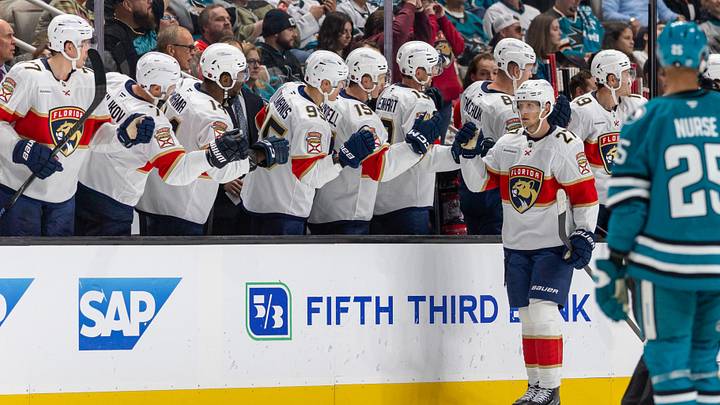
The Florida Panthers will host Vamos Gatos Night on October 15, 2026, when they face the Vancouver Canucks at Amerant Bank Arena. Besides special jerseys and community honors, how can the club turn that celebration into a greater connection with hockey?
The festivities raise a question that reaches beyond the game: does the NHL do enough to help Hispanic communities become part of hockey?
For the Panthers, the answer goes back to their own history. Al Montoya and Scott Gomez wore Florida jerseys. Today, the club also supports the Amerigol LATAM Cup, where players represent their countries and family roots. These connections give the Hispanic Heritage Month events a special meaning. But the next step is turning that into a lasting relationship with the sport.
Why Hispanic Heritage Month matters
Hispanic Heritage Month runs from September 15 to October 15. It recognizes Hispanic Americans’ histories, cultures, and contributions.
According to the federal Hispanic Heritage Month website, September 15 marks the independence anniversaries of Costa Rica, El Salvador, Guatemala, Honduras, and Nicaragua. Mexico and Chile celebrate their independence days on September 16 and 18. So, the timing sounds perfect and explains the details.
Looking for new fan bases, the NHL and NHLPA announced a joint celebration of Hispanic Heritage Month in September 2021 through the Hockey Is For Everyone program. But does this tell the whole story? Let's take a deeper look.
How the Panthers celebrate
Nearly three in ten Florida residents identify as Hispanic or Latino. U.S. Census Bureau QuickFacts puts the share at 29.2% - roughly 6.9 million people, based on the state’s 2025 population estimate. That makes Hispanic outreach an important part of connecting with the community around the Panthers. And it exists!
Moreover, during Vamos Gatos Night, the franchise will offer a special ticket package and limited-edition merchandise and spotlight Hispanic residents whose work makes a difference in the community. While that matters, the Panthers also have Hispanic hockey history to share.
Montoya and Gomez are part of Florida’s history
Al Montoya became the first Cuban American to play in the NHL. He spent two seasons with the Panthers, from 2014 to 2016.
He appeared in 45 regular-season games and posted an 18-14–5 record. In the 2015-16 campaign, he backed up Roberto Luongo and finished with a 2.18 goals-against average and a .919 save percentage.
Scott Gomez , who played for Florida in 2013–14, scored two goals and added 10 assists in 46 games. His father has Mexican roots, and his mother comes from Colombia.
In addition, Auston Matthews of the Toronto Maple Leafs and Team USA also belongs in the NHL’s Hispanic heritage conversation. But for Panthers fans, Montoya and Gomez make that history local.
They played here, and their stories relate to the franchise.
The LATAM Cup puts participation at the center
Furthermore, the Panthers’ support for the Amerigol LATAM Cup goes beyond an NHL game night.
The 2026 tournament took place in August at Panthers IceDen in Coral Springs and at Palm Beach Skate Zone in Wellington. Players competed while representing their countries or family heritage.
The event included participants from Latin America, the Caribbean, Algeria, Armenia, Greece, Israel, Lebanon, and Pakistan.
And Al Montoya returned to South Florida as a coach.
NHL.com's William Douglas reported that Team Cuba president Arnold Cuervo contacted Montoya through social media. Cuervo remembered Montoya’s popularity within South Florida’s Cuban community and invited him to lead the U-12 Cuban American team.
This is how heritage becomes part of playing the game: children compete, a former Panthers goalie coaches them, and the club helps make the opportunity possible. The Panthers also announced a $20,000 foundation contribution to the tournament. So, the connection between the South Florida hockey community and Hispanic culture is notable.
At the same time, the NHL and NHLPA supported the LATAM Cup through the Industry Growth Fund.
Is the NHL doing enough?
The LATAM Cup and Hispanic Excellence program show that the Panthers’ outreach stretches beyond merchandise. Those efforts deserve recognition. They also provide a starting point for asking how heritage celebrations can do more.
Speaking on the Hockey on the Beach podcast before the San Jose Sharks’ home opener against the Florida Panthers, Salvadoran sports journalist Fernando Abarca offered one perspective.
“We’re more than just a jersey,” he said.
Soccer has a much stronger tradition than ice hockey in many Latin American countries. Families who did not grow up around hockey may need an introduction to the rules before they become regular viewers. Playing brings another challenge: equipment, skating, and ice time costs.
Abarca called for greater access to youth hockey and more outreach to Latin American communities.
“I feel the NHL has to do a little more,” he said.
Vamos Gatos has become a familiar chant for Panthers fans around the league. But one catchy phrase does not automatically give a newcomer a connection to the game. Years into the NHL’s heritage celebrations, education, and practical information should be central to the experience.
Jerseys and recognition matter, but access, affordability, and opportunities to keep playing determine whether that relationship grows. And it's a heavy burden for one club to carry. The league should introduce and support this mission.
That means helping fans understand what they watch, sharing Hispanic hockey stories, and making affordable entry points easy to find. When a child tries hockey at a free event, families should realistically know what continued participation will cost. But that's a different story.
For now, the Panthers celebrate Hispanic players, honor community leaders, and support the LATAM Cup. But those efforts still leave a gap between acknowledging the culture and helping more people get into hockey.
A stronger connection would help a new fan know more than just the words "Vamos Gatos." It would help that person understand the game, follow the team, and find a realistic way to participate after October 15.
 Add us as a preferred source on Google